Wildfires and the resilience of critical infrastructure

By Ilias Lardas, Head of South/East Europe - Renewable Energy & Power at AXIS
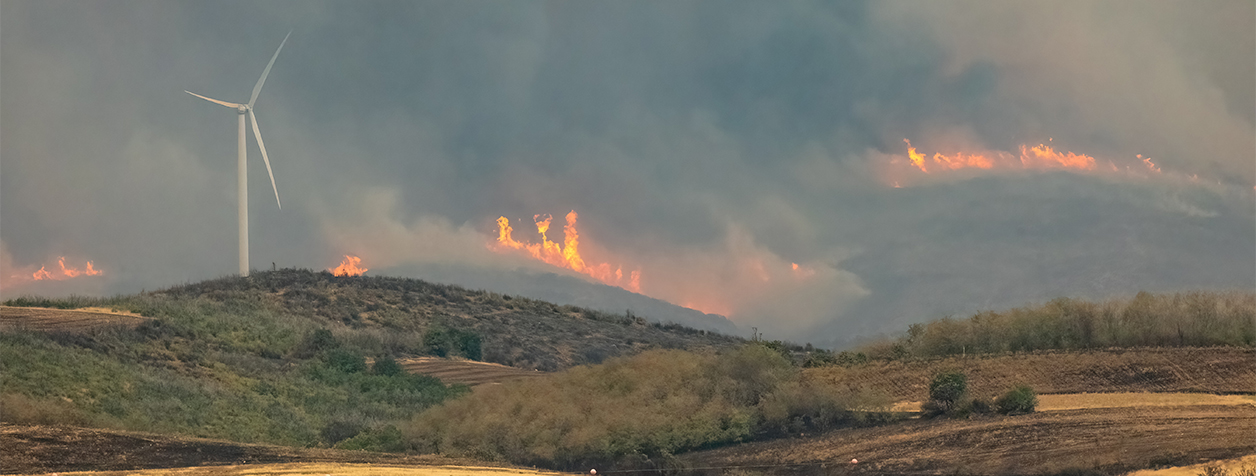
The recent wildfires in Viotia and Fokida in Greece exposed a significant vulnerability in the country's energy infrastructure. Electricity distribution and transmission networks cannot rely on isolated interventions or favorable weather conditions to remain resilient. As climate driven risks intensify, strengthening critical infrastructure is becoming essential to long term system stability.
Across Europe, wildfires are becoming more frequent and more severe. Recent incidents in Spain and France — believed to involve human negligence, with prolonged drought, extreme temperatures and strong winds contributing to their spread and intensity — illustrate how climate dynamics are placing increasing pressure on ecosystems and communities. While the proximate causes may differ from those in Greece, the pattern is consistent: climate related risks are becoming systemic rather than exceptional.
The Greek wildfires bring that systemic risk into sharper focus, revealing a specific structural vulnerability in the country’s energy infrastructure. Despite mature technological solutions and extensive international experience, the undergrounding of electricity and distribution networks remain in development. Presently infrastructure is exposed to physical, operational, and societal risks.
The implications extend beyond outages or service disruptions. Repeated vulnerabilities in the grid can contribute to public uncertainty about energy resilience and may complicate efforts to build confidence in the green transition and its long-term benefits.
Equally important is the environmental footprint of these events. Wildfires affect vegetation, wildlife and entire ecosystems, with lasting consequences for biodiversity and the natural balances that support long term environmental resilience.
A successful energy transition depends on infrastructure that supports security, reliability, transparency, and environmental resilience. Undergrounding has an important role to play in strengthening grid resilience, particularly when considered as part of a broader long-term infrastructure strategy. The growing frequency of climate driven wildfires across Europe strengthens the case for more systemic planning and investment.
There is also a growing financial dimension. Large scale wildfires can generate substantial insurance losses, with implications for underwriting, risk assessment and long-term portfolio resilience.
For specialty insurers such as AXIS, this reinforces the importance of understanding how climate-related risks interact with critical infrastructure exposures. As these risks evolve, the insurance market has an important role to play in helping customers assess, manage and plan for increasingly complex risk environments.